Tradescantia Variegata
200 MDL
Tradescantia Variegata este ca o melodie veselă în lumea plantelor, cu frunzele sale variegate ce dansează în adierea vântului. Această plantă aduce o notă de bucurie și optimism în orice încăpere.
Prima oară cultura a fost descrisă de grădinarul John Tradescant, care a servit la curtea regelui englez Carol I. Datorită aspectului său decorativ și ușurinței în îngrijire, Tradescantia a câștigat de mult recunoașterea grădinariților și popularitate largă în floricultura de interior.
Pentru a avea grijă de această “melodie vegetală”, oferiți-i lumină indirectă, udare moderată și curățenie regulată pentru a-i menține vitalitatea și frumusețea.
Planta se oferă în ghiveci simplu de fabrică.
Recomandăm și cu mare plăcere alegem unul nou și potrivit.
Out of stock
Related products
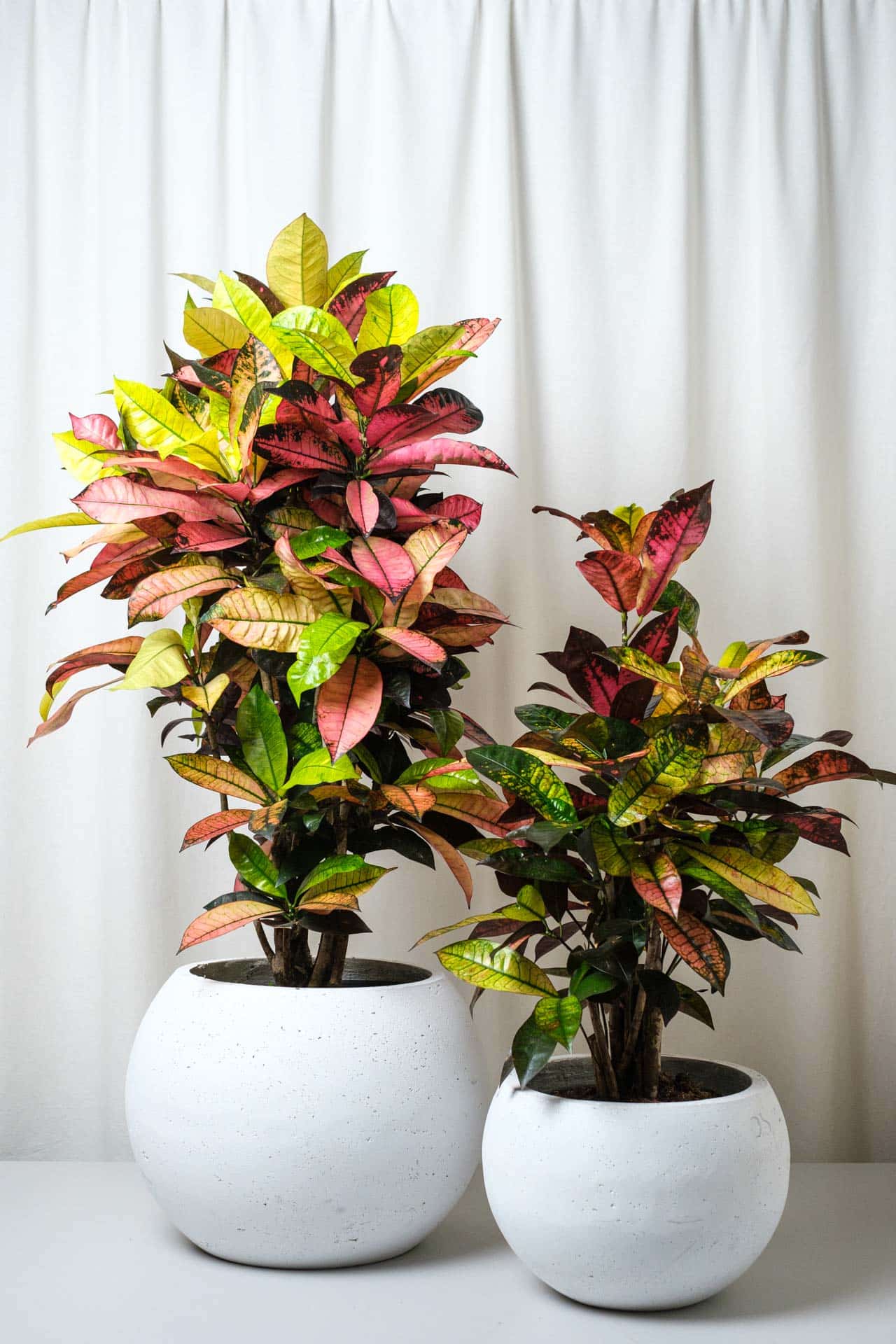
Croton Mrs Iceton is a plant that knows how to make an entrance: in shades of green, red and yellow, it looks like the cover of a gardening magazine! Native to the tropical islands of the Pacific, this beauty isn’t afraid of sunlight – in fact, it loves to shine. It’s easy to care for, but it has one little quirk: it doesn’t like to be left in water. Learn more in the Plant Library.
The plant comes in a basic nursery pot.
We are happy to suggest and help you choose a new and appropriate one.
relitzia Reginae, often called the Bird of Paradise, thrives in the wilds of South Africa and truly lives up to its majestic name. Position it in your living room or hallway, and you’ll instantly infuse your space with a touch of the jungle, harmoniously blending with urban elegance. Pollinated by birds, it features robust stems strong enough to support the weight of several birds at once. Discover its preferred conditions in the Plant Library.
Only the mature plant is in flower at the moment.
The plant comes in a basic nursery pot.
We are happy to suggest and help you choose a new and appropriate one.
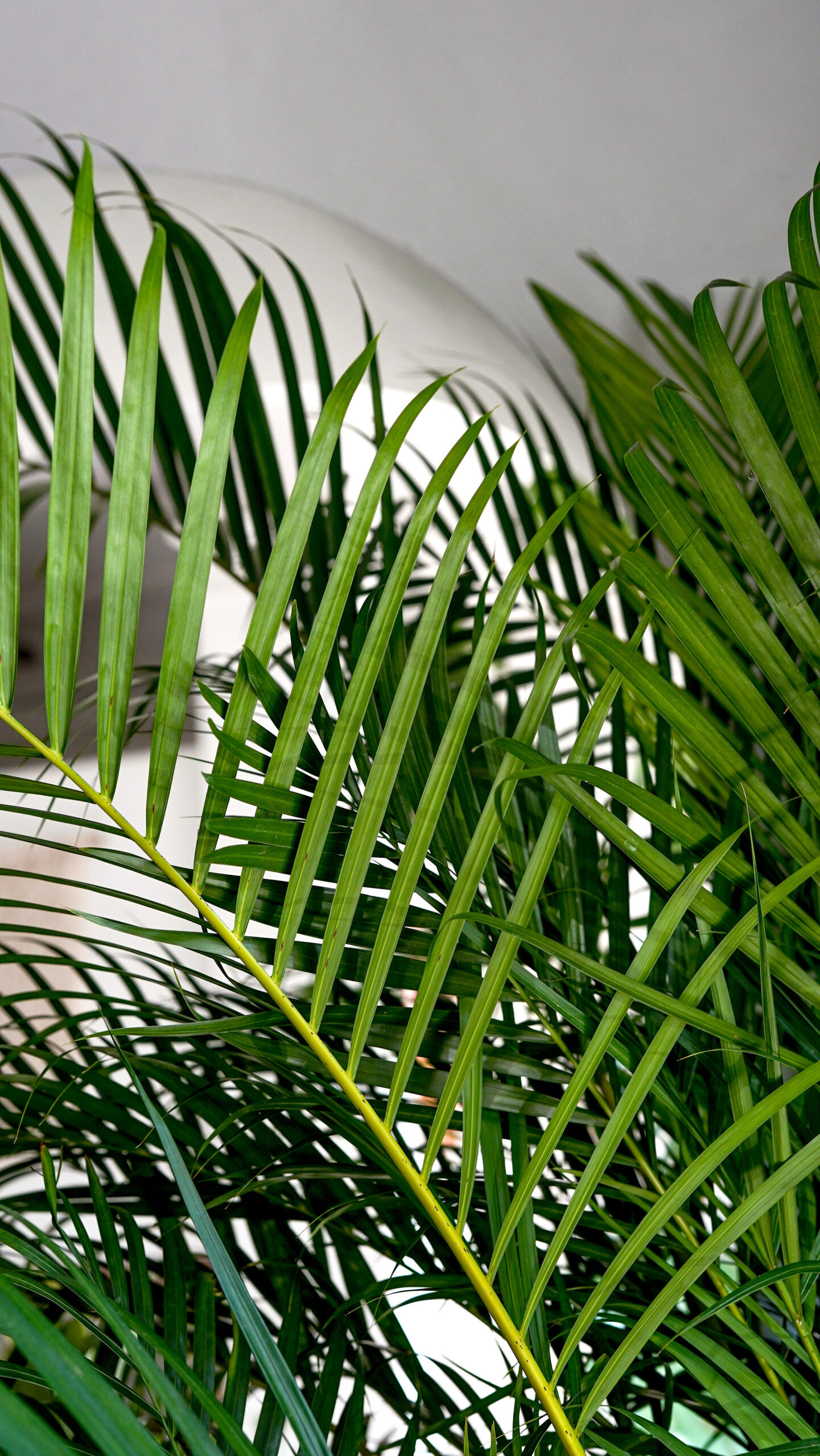
If you want to create a tropical holiday atmosphere in your home, you can’t beat the areca palm, with its elegantly arched leaves.
The Areca Palm, also known by its Latin name Dypsis Lutescens, is native to Madagascar. It is a fabulous houseplant, often grown for its dramatic tropical effect. It’s particularly good at making a visual impact wherever it’s placed. This makes it popular with plant lovers and interior designers.
With smooth, bamboo-like stems and full but narrow leaves, this green beauty needs plenty of room to spread out. We recommend placing it in a spacious area such as a reception, kitchen, hallway or living room. If you have plenty of light in your bedroom it would also work well there.
The plant comes in a basic nursery pot.
We are happy to suggest and help you choose a new and appropriate one.
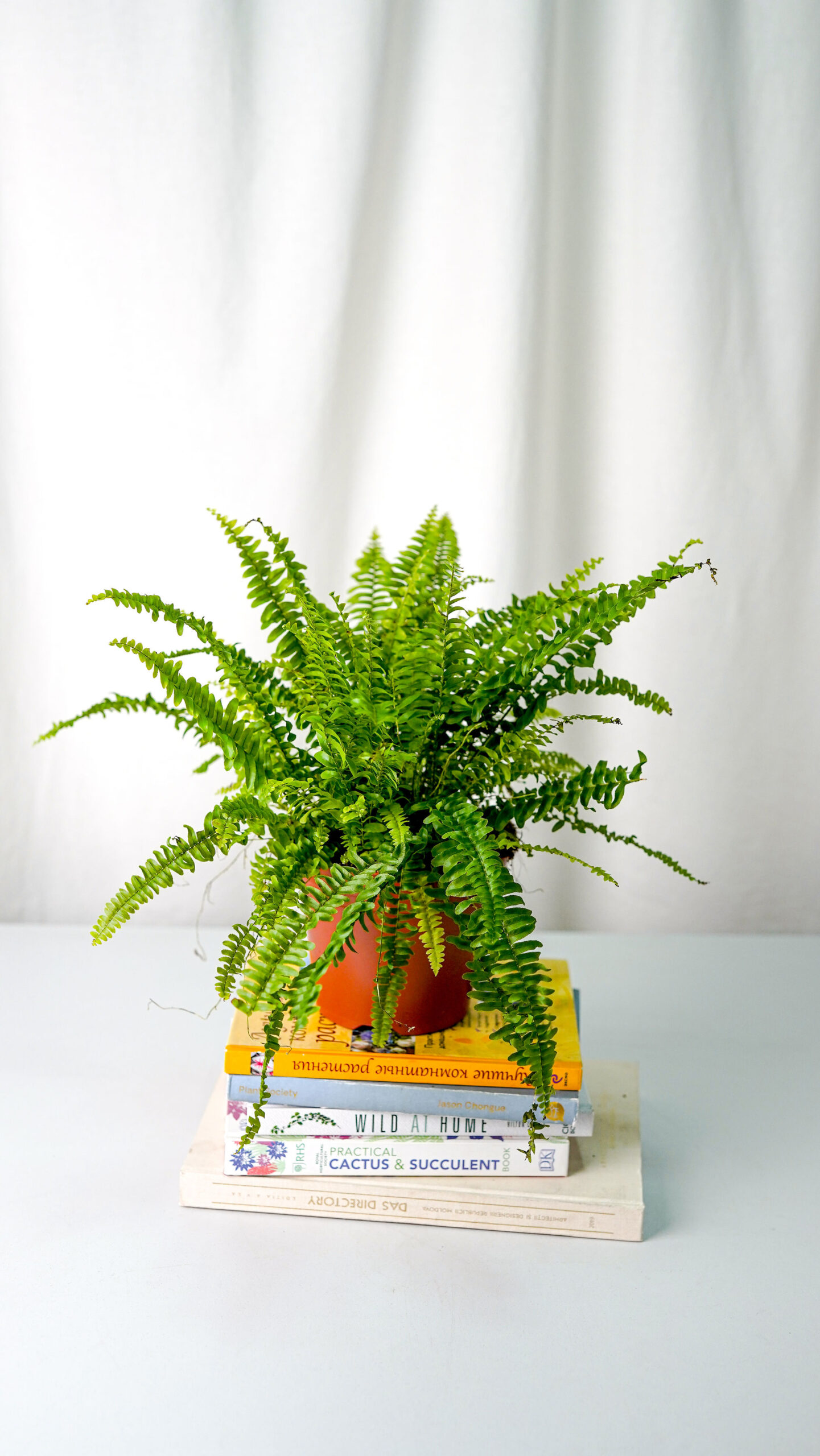
The Boston fern is one of the easiest ferns to care for, which has made it a popular houseplant for decades. It is not difficult to look after, but it does require some special care. The most important thing is to give it the ideal growing conditions: standard room temperature (13-24°C), plenty of humidity and indirect light. If the humidity is too low, the leaves will turn yellow. Another important aspect is the soil. It must be kept moist as one of the main reasons why the plant may not survive is dry soil.
A popular display is a hanging basket. Arranged in this way, the leaves of the plant will arch towards the basket, giving the appearance of floating in the air. Boston ferns are not considered toxic to pets or children. In a pot or hanging from a modern macrame hanger, the Boston Fern is a wonderful addition to the kitchen or bathroom.
The plant comes in a basic nursery pot.
We are happy to suggest and help you choose a new and appropriate one.
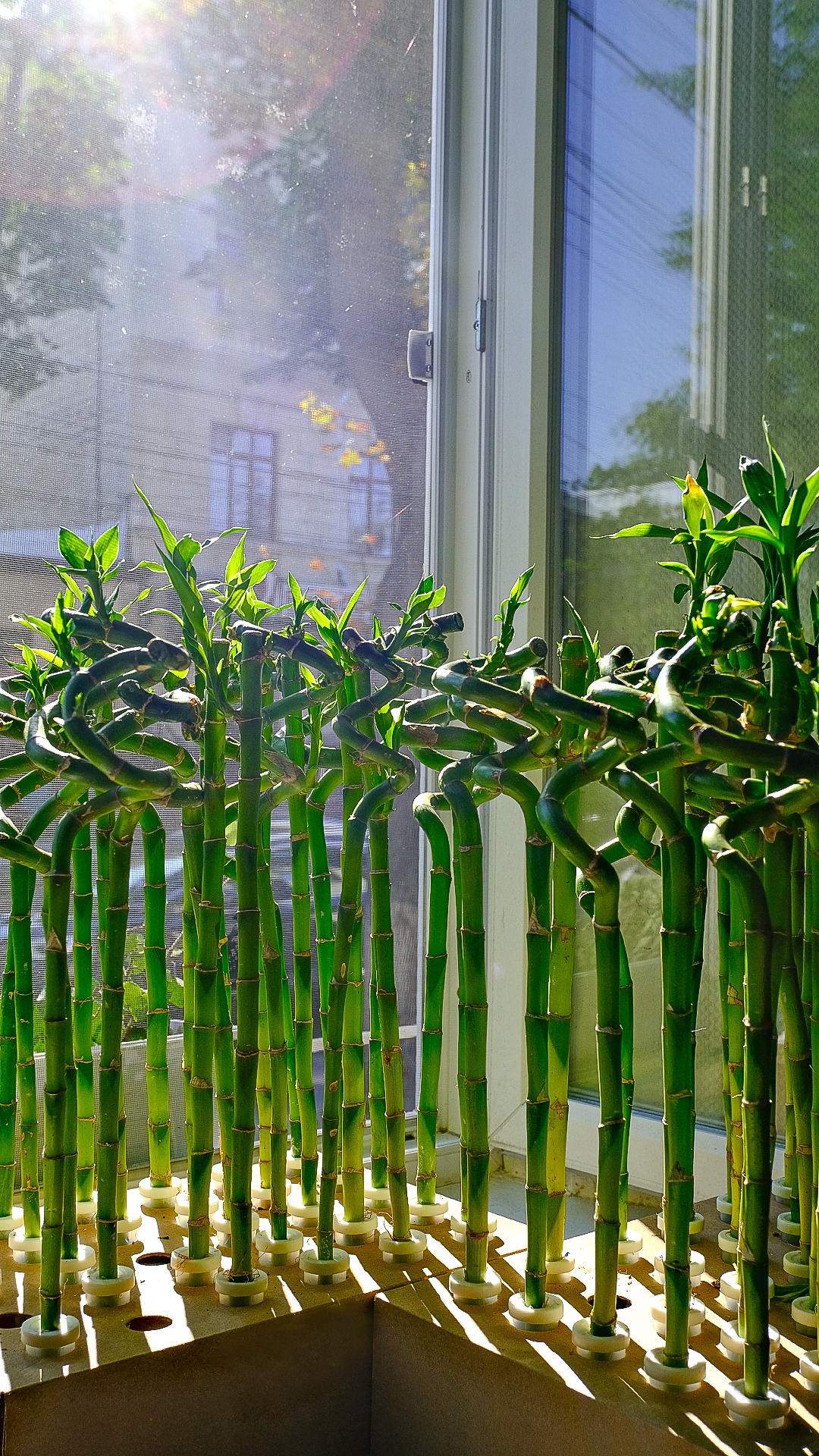
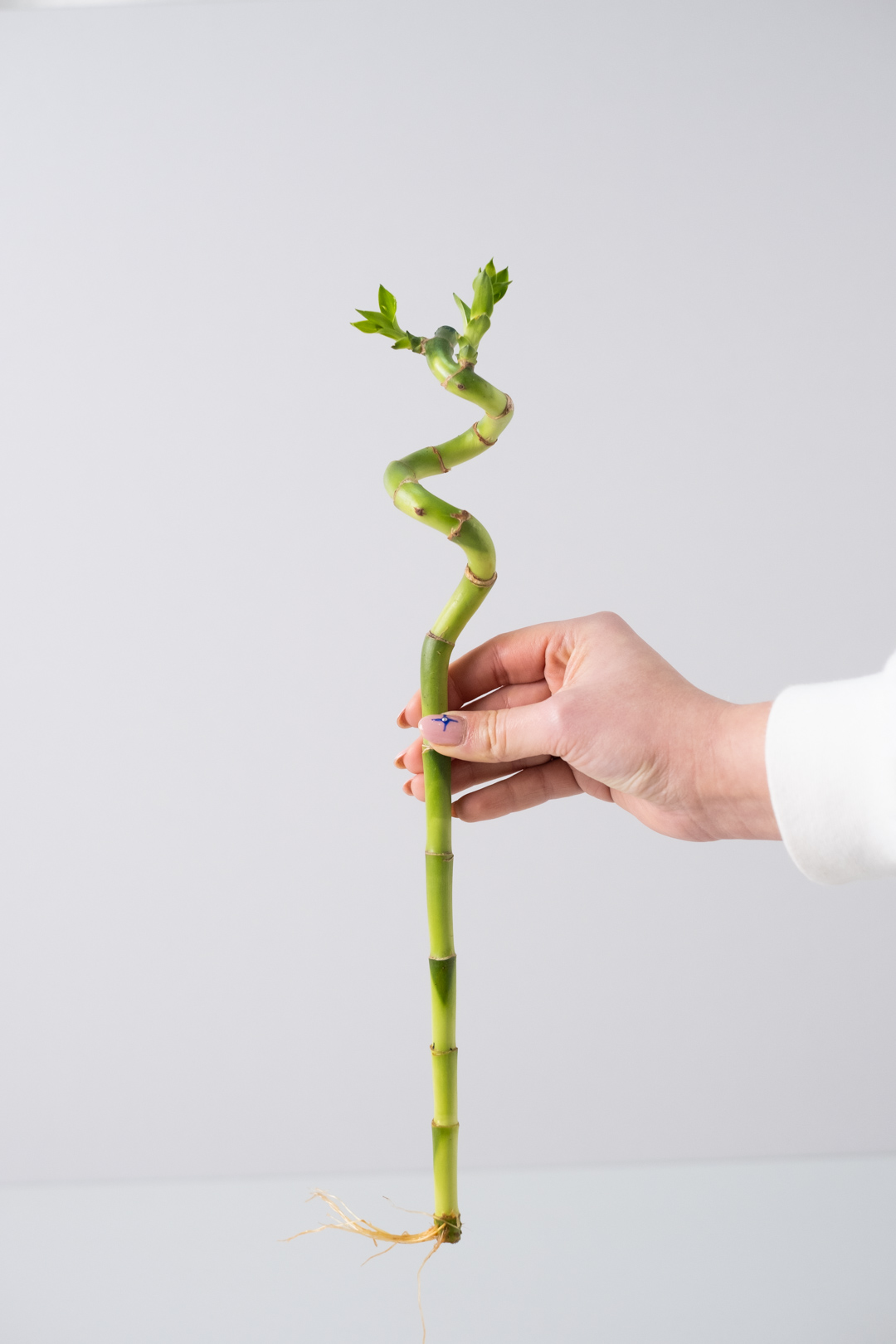
Plants often reflect the ambience of their native habitats. For a touch of Zen and Feng Shui, choose Lucky Bamboo, a plant believed to bring good fortune.
Lucky Bamboo thrives in a water-filled container, maintaining its decorative appeal over time. It’s low-maintenance: simply change the water regularly, place it in a bright spot, and there’s no need for fertilizer.
The plant does not require pots or soil. After purchase, remove the protective cover and place the plant in any container filled with water.
The Schefflera plant, Schefflera Arboricola, native to South Asia and parts of Australia, is often called the umbrella plant, and for good reason. The five to seven leaflets that make up each long-stalked leaf resemble umbrellas.
The foliage will keep its healthy, glossy appearance if you spray it daily with water at room temperature. Being a medium light lover, placing it in strong direct sunlight will burn its leaves. It will also not do well in areas of extreme light deficiency and is best placed near a window – even a north-facing one. Yellowing and drooping leaves are probably a sign that the plant is overheating. Leave the soil to dry out longer between waterings. Brown, dry leaves – may be caused by underwatering.
To control the height of the plant and increase its bushy appearance, cut back any overhanging branches in spring. Don’t cut more than 30% of the plant as this can cause shock. It is considered poisonous to humans and pets. The sap in the leaves can cause mild skin irritation.
The plant comes in a basic nursery pot.
We are happy to suggest and help you choose a new and appropriate one.
Originating from the Mediterranean countries, this myrtle tree is like a little vacation on the southern coastline. It doesn’t require a sophisticated diet but loves bright spots. Hailing from the Mediterranean and North Africa, it has been cherished as an indoor plant since ancient times. Visit the Plant Library for care tips.
The plant comes in a basic nursery pot.
We are happy to suggest and help you choose a new and appropriate one.
Over the past few years, the Ficus Lyrata has been creating waves of admiration around the world. Thanks to its numerous appearances in popular design magazines, blogs and social media, it has been catapulted to superstar status in the plant world.
Any plant is a positive addition to your living or working space, but some plants have a much richer visual impact. Take Ficus Lyrata, for example. This plant is almost a work of art in itself. You can’t miss its violin-shaped leaves, crisscrossed with distinct, pale veins that add texture. The best part is that as the leaves grow larger, they become even more impressive.
Don’t worry if it loses a leaf or two after delivery – it needs time to adapt to its new home. It’s perfectly normal. It may also shed a few leaves in winter, and while it is small, the Ficus can live temporarily on shelves. Once it has grown, it will be placed on the floor because of its larger size.
The plant comes in a basic nursery pot.
We are happy to suggest and help you choose a new and appropriate one.
English ivy (Hedera helix variegata) is one of the most common ivy species and the most widely grown. It is very easy to grow, both in pots and as an ornamental outdoor plant. You’ve probably noticed it on the outside of buildings and houses that look like entrances to a secret botanical world.
Potted ivy requires much less water. Before watering, check the consistency of the substrate, which should be loose but dry on the surface. Be careful not to overwater. For optimal lighting, position the plant near a window to ensure it receives abundant light without direct exposure. Poor lighting can reduce the number of leaves and cause them to discolour.
Indoors, it can be placed on a shelf or taller plant stand to allow it to create that eye-catching cascade of creamy white variegated green leaves. It tends to grow vigorously, providing quick results for those who want to transform their room or garden in a short space of time.
The plant comes in a basic nursery pot.
We are happy to suggest and help you choose a new and appropriate one.
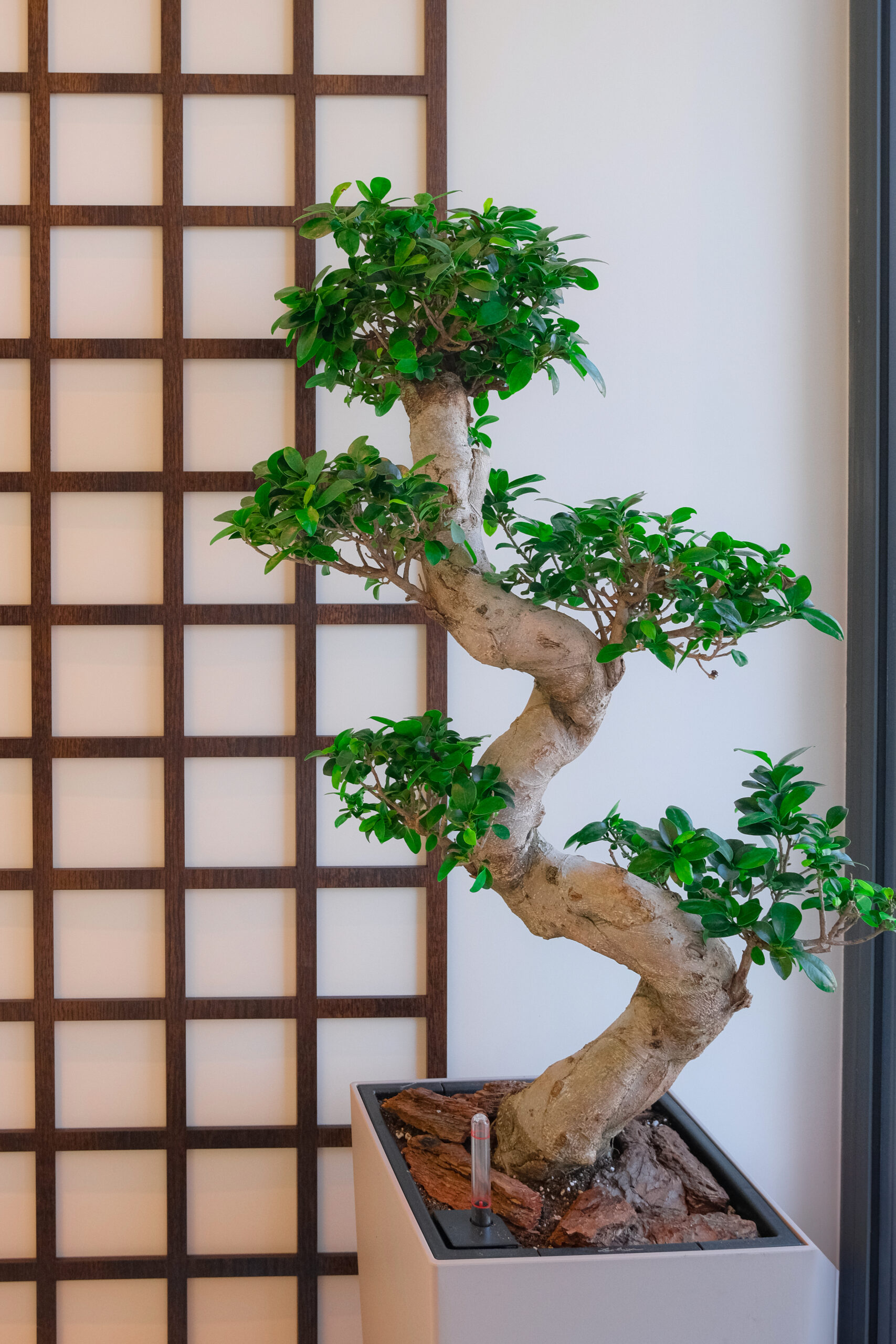
Bonsai trees are a fascinating art form that combines Asian aesthetics and feng shui in the homes of those who choose to care for them.
Translated, ‘bonsai’ means ‘planted in a bowl’. Bonsai is a true philosophy of life, a hobby that brings peace of mind and helps us to cope with everyday stress. Caring for a single tree in a pot is a kind of small-scale gardening.
Pruning is also important to keep bonsai trees small and in perfect shape. Maintenance pruning strengthens the bonsai and encourages new branch growth.
The plant comes in a basic nursery pot.
We are happy to suggest and help you choose a new and appropriate one.
Calathea is a plant that presents you with many challenges if you want to keep it radiant. That look of tropical beauty that you fall in love with when you see it takes a lot of care to maintain.
It is a perennial plant that lives in the forests of Bolivia, and its tropical nature suggests that it likes the soil to be moist and never completely dry. Calathea requires high humidity and constant soil moisture. In other words, give it jungle-like conditions and you’ll both be happy.
If you look at the plant and it seems changed, it’s probably not just your imagination. Its leaves are very lively and move throughout the day. Calathea is guaranteed to add a dramatic touch to your plant collection, as it is in high demand.
The plant is offered in simple factory pots.
We recommend and with a great pleasure will help you to choose a new and suitable one.