Zamioculcas
from 450 MDL
Zamioculcas comes from the dry part of Africa, which explains why it doesn’t like excess water. So if you happen to forget to water it once, twice, three times… it will forgive you and keep on growing. Although it has flourished for hundreds of years, it was only in 1996 that it began to make its way into homes, offices and hearts around the world.
It is an excellent plant for the novice gardener. It accepts dim light, tolerates drought and even neglect without suffering an identity crisis. It is highly resistant to disease and predators. If it gets too big and invades your space, cut it back. Nothing more. Its broad, smooth leaves reflect sunlight and brighten rooms.
Don’t taste it, keep it away from overly curious children or pets with a habit of nibbling, and wear gloves when caring for it. Otherwise, just enjoy its lush appearance.
Fun fact:
ZZ plants are widely used in malls and public spaces, and people often consider them artificial or fake simply because they look so good, with their fleshy, glossy leaves.
The plant comes in a basic nursery pot.
We are happy to suggest and help you choose a new and appropriate one.
Related products
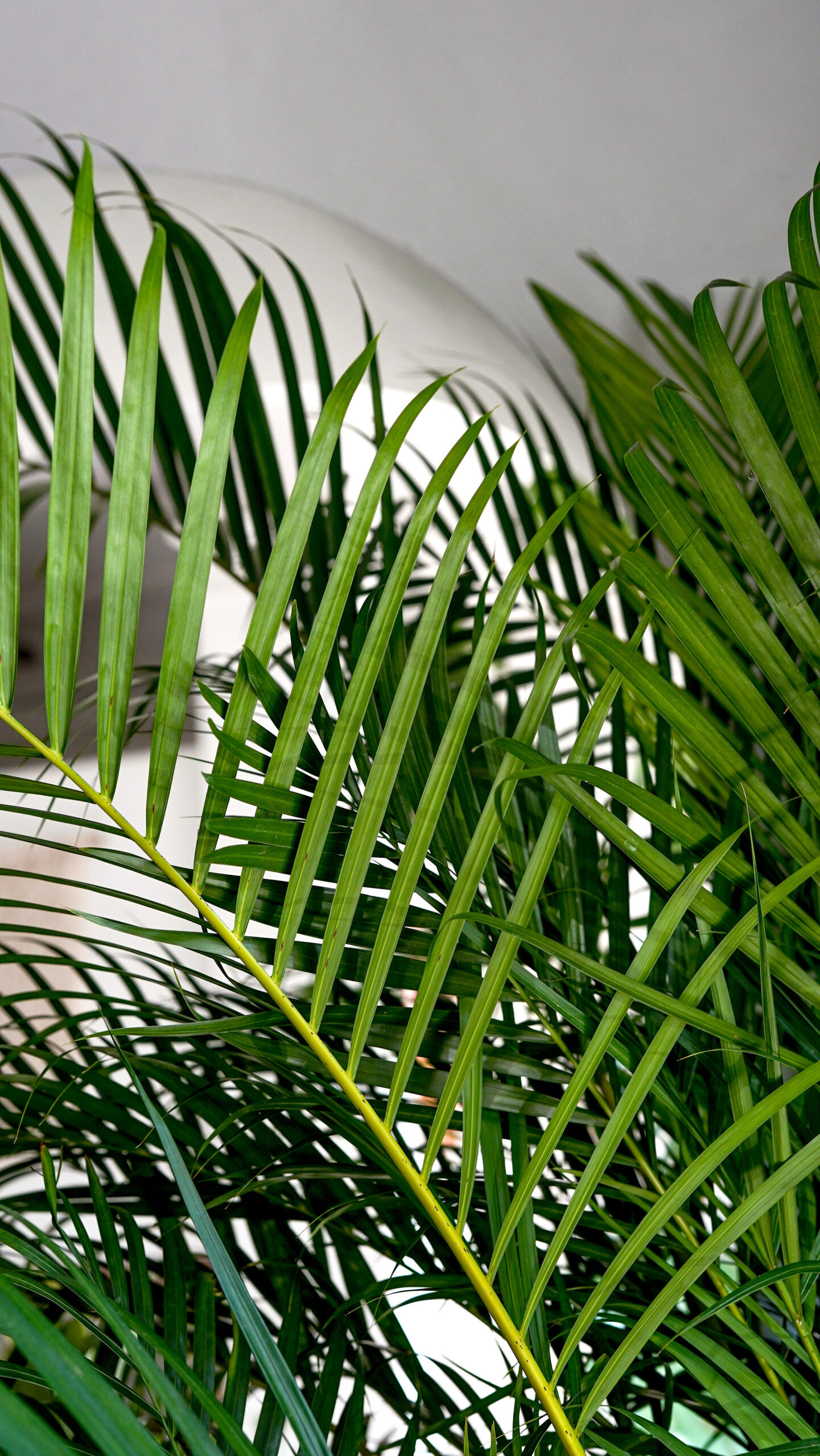
If you want to create a tropical holiday atmosphere in your home, you can’t beat the areca palm, with its elegantly arched leaves.
The Areca Palm, also known by its Latin name Dypsis Lutescens, is native to Madagascar. It is a fabulous houseplant, often grown for its dramatic tropical effect. It’s particularly good at making a visual impact wherever it’s placed. This makes it popular with plant lovers and interior designers.
With smooth, bamboo-like stems and full but narrow leaves, this green beauty needs plenty of room to spread out. We recommend placing it in a spacious area such as a reception, kitchen, hallway or living room. If you have plenty of light in your bedroom it would also work well there.
The plant comes in a basic nursery pot.
We are happy to suggest and help you choose a new and appropriate one.
Originating from the Mediterranean countries, this myrtle tree is like a little vacation on the southern coastline. It doesn’t require a sophisticated diet but loves bright spots. Hailing from the Mediterranean and North Africa, it has been cherished as an indoor plant since ancient times. Visit the Plant Library for care tips.
The plant comes in a basic nursery pot.
We are happy to suggest and help you choose a new and appropriate one.
English ivy (Hedera helix variegata) is one of the most common ivy species and the most widely grown. It is very easy to grow, both in pots and as an ornamental outdoor plant. You’ve probably noticed it on the outside of buildings and houses that look like entrances to a secret botanical world.
Potted ivy requires much less water. Before watering, check the consistency of the substrate, which should be loose but dry on the surface. Be careful not to overwater. For optimal lighting, position the plant near a window to ensure it receives abundant light without direct exposure. Poor lighting can reduce the number of leaves and cause them to discolour.
Indoors, it can be placed on a shelf or taller plant stand to allow it to create that eye-catching cascade of creamy white variegated green leaves. It tends to grow vigorously, providing quick results for those who want to transform their room or garden in a short space of time.
The plant comes in a basic nursery pot.
We are happy to suggest and help you choose a new and appropriate one.
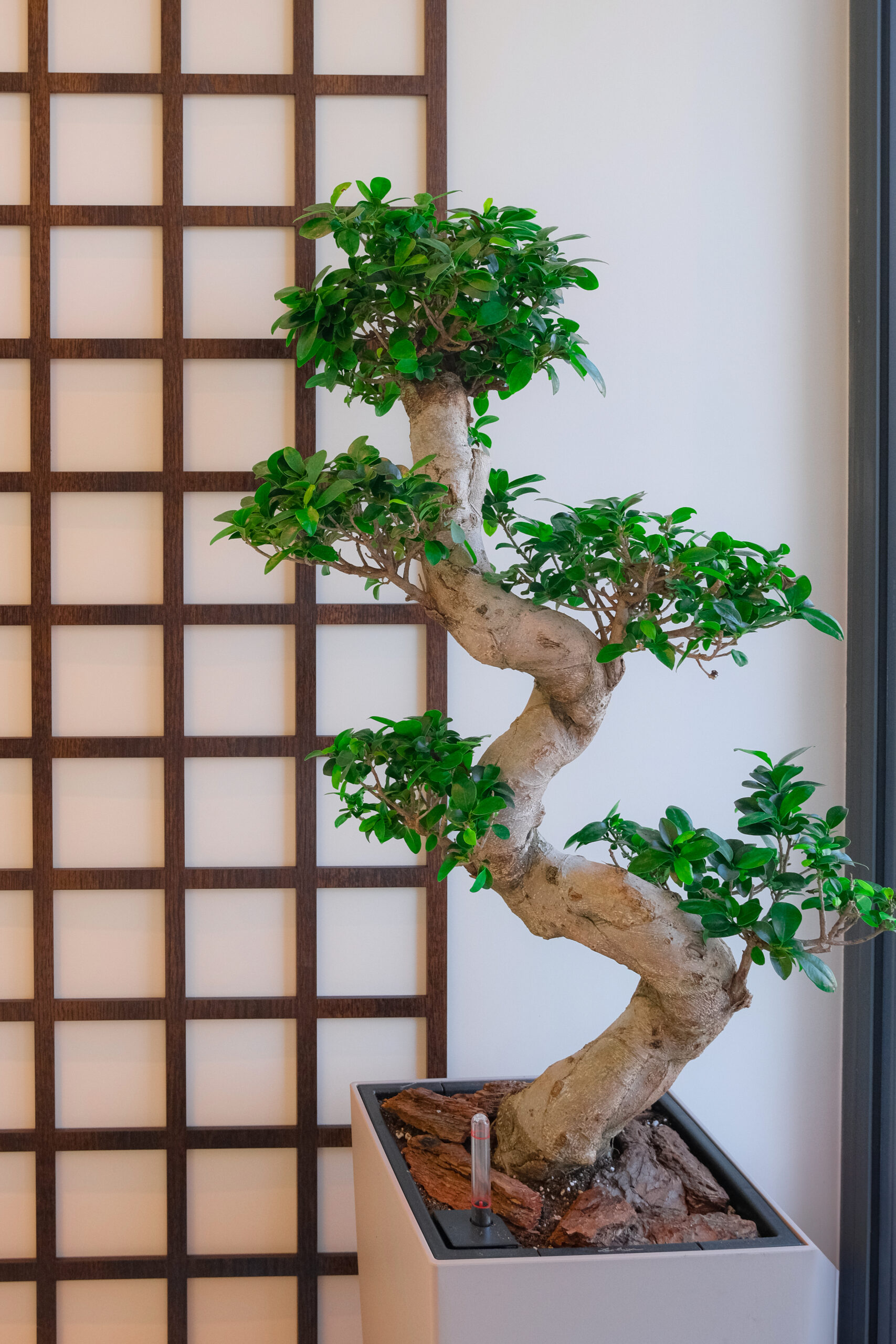
Bonsai trees are a fascinating art form that combines Asian aesthetics and feng shui in the homes of those who choose to care for them.
Translated, ‘bonsai’ means ‘planted in a bowl’. Bonsai is a true philosophy of life, a hobby that brings peace of mind and helps us to cope with everyday stress. Caring for a single tree in a pot is a kind of small-scale gardening.
Pruning is also important to keep bonsai trees small and in perfect shape. Maintenance pruning strengthens the bonsai and encourages new branch growth.
The plant comes in a basic nursery pot.
We are happy to suggest and help you choose a new and appropriate one.
Hoya Kerrii, commonly known as the Sweetheart Hoya or Valentine Hoya, is native to Southeast Asia, particularly in Thailand and parts of China. This unique vining succulent is trendy each year around Valentine’s Day.
Not only it is adorable, but produces trailing woody vines that are delightfully easy to grow, low maintenance, and slow-growing. Give it indirect light, and moderate watering and protect it from low temperatures.
The plant comes in a basic nursery pot.
We are happy to suggest and help you choose a new and appropriate one.
The plant comes in a basic nursery pot.
We are happy to suggest and help you choose a new and appropriate one.
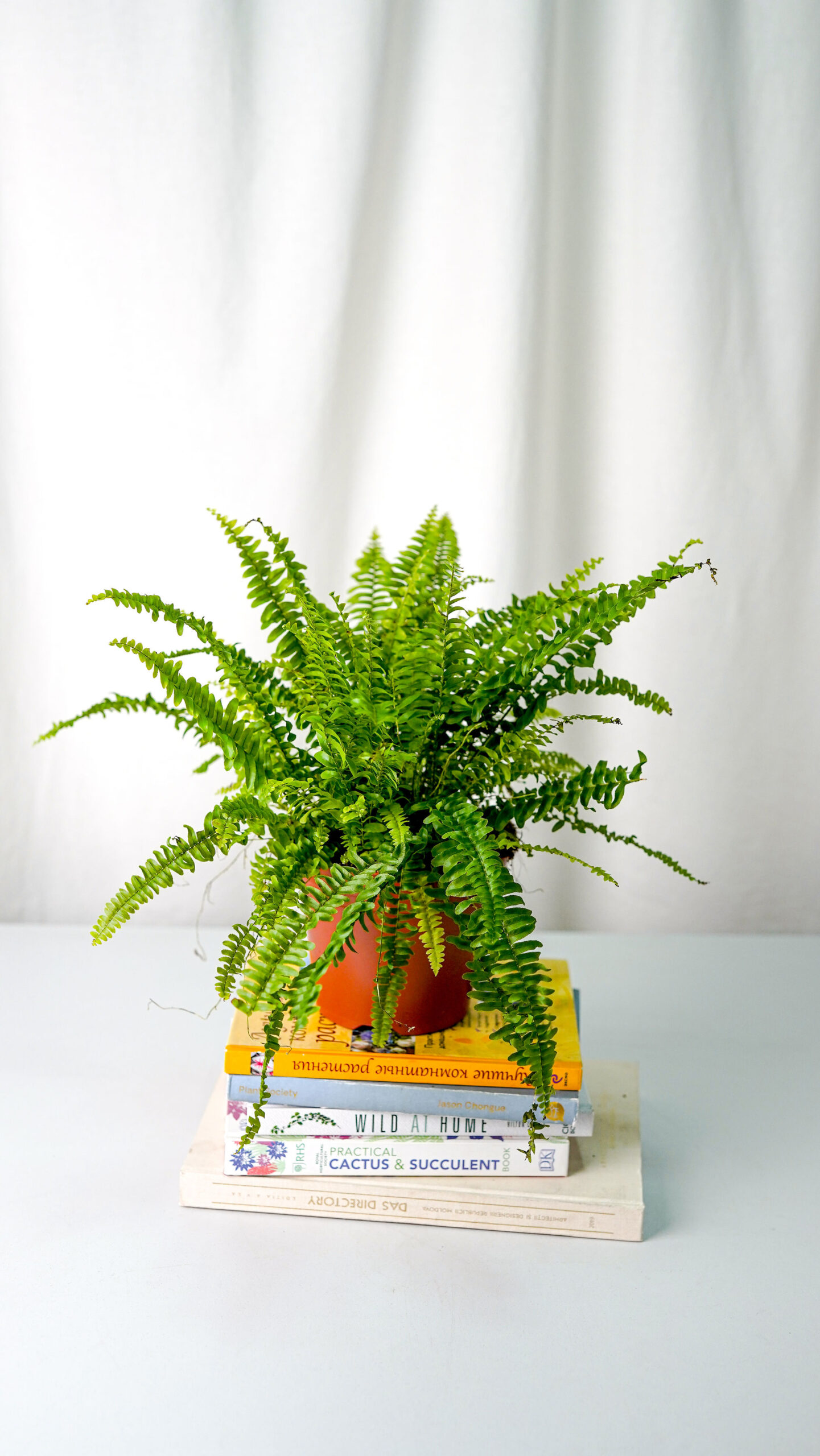
The Boston fern is one of the easiest ferns to care for, which has made it a popular houseplant for decades. It is not difficult to look after, but it does require some special care. The most important thing is to give it the ideal growing conditions: standard room temperature (13-24°C), plenty of humidity and indirect light. If the humidity is too low, the leaves will turn yellow. Another important aspect is the soil. It must be kept moist as one of the main reasons why the plant may not survive is dry soil.
A popular display is a hanging basket. Arranged in this way, the leaves of the plant will arch towards the basket, giving the appearance of floating in the air. Boston ferns are not considered toxic to pets or children. In a pot or hanging from a modern macrame hanger, the Boston Fern is a wonderful addition to the kitchen or bathroom.
The plant comes in a basic nursery pot.
We are happy to suggest and help you choose a new and appropriate one.
A collection of carefully selected plants for the fluffiest and most playful of companions. In addition to their attractive appearance, these plants are safe for children and pets, even in the event of accidental nibbling. This set contains the following small plants: Banana, Strelitzia, Calathea and Fern.
*Enjoy free transplanting and delivery with this purchase. Choose between clay or plastic pots for your set.
*You save more when you buy a plant set. Additional discounts cannot be applied.
From aromatherapy to floral arrangements, there are many ways to enjoy eucalyptus. Eucalyptus plants thrive indoors as decorative shrubs with aromatic, fragrant leaves. They are not overly demanding, but a few guidelines will ensure optimum care.
Plant the eucalyptus in a large, conical pot for easy transplanting outdoors. Although resistant to drought, potted eucalyptus will dry out more quickly than in the garden. Be sure to water thoroughly until excess water drains away; good drainage is essential as eucalyptus does not tolerate waterlogged soil.
If you’re growing eucalyptus indoors, place the pot near a south-facing window so it gets plenty of sunlight. Regular pruning is necessary due to its rapid growth.
The plant comes in a basic nursery pot.
We are happy to suggest and help you choose a new and appropriate one.
A terrarium with sand and succulents is like a slice of desert captured under glass—minimalist yet full of life. It’s the kind of décor that brings a touch of nature right onto your living room or office shelf, without demanding much attention. Succulent plants are like seasoned travellers—they can survive weeks without water and won’t be a bother. The perfect gift for someone who wants a bit of nature without the fuss! Discover their preferred conditions in the Plant Library.
relitzia Reginae, often called the Bird of Paradise, thrives in the wilds of South Africa and truly lives up to its majestic name. Position it in your living room or hallway, and you’ll instantly infuse your space with a touch of the jungle, harmoniously blending with urban elegance. Pollinated by birds, it features robust stems strong enough to support the weight of several birds at once. Discover its preferred conditions in the Plant Library.
Only the mature plant is in flower at the moment.
The plant comes in a basic nursery pot.
We are happy to suggest and help you choose a new and appropriate one.